


Updated: 01/29/26
Stormborn Map
Prologue: When the sky goes black again
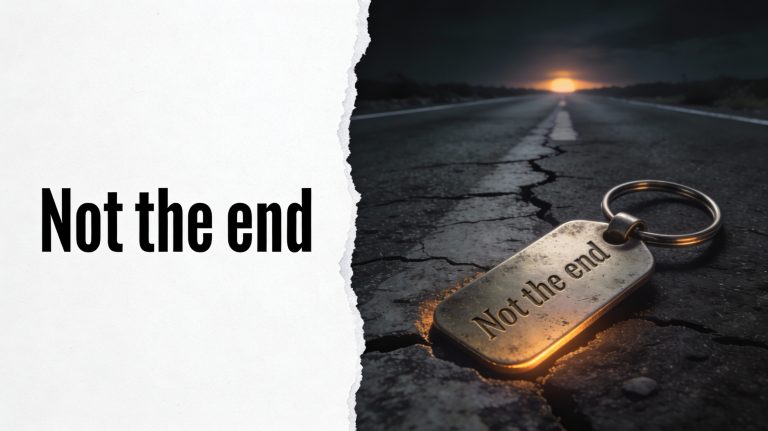
Is relapse the end?
No.
But relapse has a way of making that “no” feel like a weak prayer you can’t even finish. It hits like a squall you didn’t respect—one moment you’re upright, telling yourself you’re finally different, and the next you’re swallowing saltwater and thinking, “I’m back here. I’m really back here.”
Relapse isn’t the end of recovery. It isn’t proof you’re beyond help. It isn’t a verdict from the universe that you’re cursed.
Relapse is a battle you lost.
And this is where it gets dangerous: when you lose a battle, your mind starts rewriting history. It tries to convince you the whole war was always lost. That lie is old. It has buried a lot of people.
This article is not here to excuse relapse, soften relapse, or dress it up like a hero’s journey while the house is still burning. Relapse can destroy marriages, careers, bodies, and trust. It can kill you. It can kill the part of you that still believes you’re worth saving.
But relapse is not automatically “the end.”
Staying in relapse can be.
If you’re reading this right after using—shaking, numb, panicked, ashamed—take this as your flare in the dark: you can turn back. You don’t need to feel ready. You need to move.
Slip vs relapse (what’s the difference?)
Chapter I: The first crack in the ice
People get tangled in definitions. In recovery reality, the difference between a slip and a relapse comes down to one thing: what you do next.
A slip (sometimes called a lapse) is a brief return to use followed by immediate honesty and corrective action. It’s the moment the ice breaks under you—and instead of pretending you’re fine, you start shouting for help and clawing toward the edge.
A slip often includes:
- You use once or for a short burst, then tell someone safe quickly
- You get back to meetings, therapy, sponsor contact, or your recovery community right away
- You remove access and tighten boundaries instead of bargaining with yourself
- You treat it as an emergency signal, not as “proof” you’re doomed
A relapse is when the slip grows teeth and becomes a pattern. The substance comes back, yes—but so does the system of addiction: secrecy, justification, manipulation, isolation, and the slow rebuild of a life organized around using.
Relapse often includes:
- Hiding it, lying, deleting evidence, “controlling the story”
- Making rules to keep using (“only weekends,” “only at night,” “only beer,” “only pills”)
- Pulling away from anyone who can see clearly
- Rebuilding routines that protect the drug, not your life
Here’s the line that matters: a slip becomes relapse when you choose secrecy over support.
And the hopeful part: relapse can still become a return when you choose truth over shame—fast.
Why relapse feels like the end of the world
Chapter II: Shame—storm-wind in the chest
Relapse doesn’t just bring back the substance. It brings back the emotional weather that made the substance feel necessary.
People expect guilt. What blindsides them is the avalanche: shame, grief, panic, dread, self-disgust, fear of consequences, fear of being found out, fear of hurting the people they love again. It’s not one emotion—it’s a pile-on.
Shame is especially brutal because it doesn’t say, “You did something bad.” Shame says, “You are bad.” Then it points at the relapse like evidence.
Shame also isolates. It tells you:
- Don’t tell anyone
- You’ll destroy what’s left
- They’ll give up on you
- You’ll be judged or rejected
- You’ve used up your last chance
This is where relapse turns lethal—not only because of overdose risk, but because isolation is where despair grows unchallenged. A person alone with shame starts believing shame is truth. The mind becomes a courtroom with no defense attorney.
Relapse can feel like the end of the world because it threatens the one thing you were trying to build: a self you could trust. When that trust fractures, it can feel like the ground is gone.
But a fractured oath can be reforged. Not with speeches. With action.
Why you go back to old levels fast (or worse)
Chapter III: The old hunger wakes
A lot of people ask, “Why did I go from sober to full-throttle so fast?”
Because addiction doesn’t reset just because you stopped for a while.
Abstinence can reduce tolerance and give your body time to heal, but addiction is not a simple habit. It’s a learned survival pathway: when pain rises, the brain remembers the shortcut. If you’ve used substances to numb panic, grief, trauma, or emptiness, your nervous system can treat relapse like grabbing a weapon mid-ambush.
Also, relapse usually isn’t about “having fun.” It’s about getting out of your own skin.
After a relapse, people often use harder because:
- The goal becomes escape, not pleasure
- Shame and fear create urgency (“make it stop, now”)
- The brain starts bargaining, then escalating when bargains fail
- Once the “streak” is broken, the “why not?” voice gets louder
The physical danger here is real
After clean time, tolerance often drops. Returning to an old dose—especially with opioids, alcohol, or benzodiazepines—can cause overdose or other serious medical complications. Alcohol and benzodiazepine withdrawal can be medically dangerous, and in some cases life-threatening, so don’t “tough it out” alone if you’re at risk.
If you or someone you love is in immediate danger, call 911. In the U.S., you can call or text 988 for crisis support.
Does relapse mean I didn’t love my family?
Chapter IV: Love doesn’t break the curse by itself
No.
Relapse can look like choosing the substance over the people you love, and families are not wrong to feel betrayed—especially if lying, broken promises, or repeated cycles are part of the history. The harm is real. The fear is real. The exhaustion is real.
But love and addiction can coexist. People in active addiction often love their families fiercely and still do things that devastate them. That contradiction is part of what makes addiction so brutal.
Addiction hijacks priorities the way drowning hijacks dignity. A drowning brain screams for air. An addicted brain screams for relief. In that state, it will use whatever tools it has—money, charm, rage, silence, manipulation—to reach the substance. It’s not because love is fake. It’s because love alone doesn’t overpower a hijacked survival system.
This matters because if you interpret relapse as “I don’t love them,” you’ll drown in shame and use that shame as an excuse to keep using. A more accurate, more useful truth is this: you can love your family and still need stronger recovery structure than love.
Love is a reason. It’s not a plan.
Why you become someone you hate when using
Chapter V: When the beast takes the helm
In sobriety, you can feel your values again. In addiction, the substance becomes the command center. The goal narrows until everything is measured by one question: “Does this get me relief?”
That’s how people become strangers to themselves.
Addiction rewards whatever keeps the supply flowing. If lying buys time, lying gets reinforced. If manipulation gets access, manipulation becomes a tool. If isolation reduces accountability, isolation feels “safe.”
Common addiction behaviors aren’t random moral collapse—they’re learned strategies:
- Rationalizing (“It’s not that bad,” “I deserve this,” “I’ll stop tomorrow”)
- Minimizing (“At least it’s not my old drug,” “I’m still going to work”)
- Blaming (“If they hadn’t pushed me, I wouldn’t have used”)
- Bargaining (“Only weekends,” “Only a little”)
- Hiding (“No one can know”)
Many people also hit a nasty loop after relapse: “I already caused damage, so why stop now?” That’s the beast talking. It uses the wreckage to demand more wreckage.
You are responsible for your choices, and you can own the harm without declaring yourself permanently evil. The “you” you hate is often you under addiction’s rule—your hands on the wheel, yes, but the beast leaning over your shoulder, whispering threats and promises.
Recovery is the long work of taking the helm back.
Is relapse dangerous physically or emotionally?
Chapter VI: The cliff—overdose, withdrawal, and despair
Both. And you should treat it like both.
Physical danger
Relapse can kill you or permanently harm you, especially when:
- Tolerance has dropped and you return to old amounts (overdose risk)
- You mix substances (opioids + benzos, alcohol + benzos, etc.)
- You use alone (nobody to respond if you overdose)
- You have underlying medical conditions
- You’re at risk of severe withdrawal (particularly alcohol or benzodiazepines)
Even beyond overdose, relapse increases risk of accidents, violence, unsafe sex, infections, and other medical fallout.
Emotional danger
Relapse can also trigger:
- Suicidal thoughts or self-harm urges
- Severe depression or panic
- Trauma symptoms and emotional flooding
- A spiral of isolation and hopelessness
If you’re feeling unsafe with yourself, don’t treat that as “just feelings.” Treat it as a crisis and get immediate help.
If relapse isn’t the end, what makes it become the end?
Chapter VII: Silence—the enemy’s favorite weapon
Relapse becomes the end when it turns into secrecy.
Two forces commonly keep people trapped:
- Hiding the relapse
- Letting shame become the reason not to seek help
This is the sick twist: the very feelings that make you want to use—shame, fear, grief—then become the “logic” that keeps you from reaching out. Shame says you’re unworthy of help. Fear says consequences are worse than reality. Isolation says you’re safer alone.
But secrecy is not safety. Secrecy is the staging ground for escalation.
If you want relapse not to become the end, you have to break the spell: tell the truth to a safe person, fast. Not after you “get it together.” Not after you’ve cleaned up the evidence. Not after you’ve dug deeper. Now.
What did AA mean by “jails, institutions, and death”?
Chapter VIII: The three gates at the edge of the map
AA’s phrase “jails, institutions, and death” is blunt because addiction is blunt. It’s not a curse. It’s a pattern observed over decades: when addiction runs unchecked, outcomes tend to narrow.
- Jails: arrests, probation violations, DUIs, violence, theft, possession, court-ordered programs
- Institutions: detox, rehab, psychiatric units, hospitals, shelters, long-term medical care
- Death: overdose, organ failure, accidents, suicide, violence
This isn’t meant to scare you into pretending. It’s meant to wake you up without lying to you. The stakes are real. Denial is expensive.
But the phrase is not destiny. It’s a warning sign on a road. And roads can be left.
What to do immediately after a relapse
Chapter IX: Rally your shield-wall in the first 2424 hours
Move quickly. The addicted brain tries to normalize relapse. It tells stories to make continued use feel reasonable. Your job is to interrupt that story before it becomes your next month.
- Tell one safe person today
Sponsor, sober friend, therapist, case manager, or trusted family member with boundaries. Say it plainly: “I relapsed. I need help. I’m not okay alone with this.” - Don’t stay where you used
Change environment if possible. Leave the house, go to a public safe place, sit with someone sober, go to a meeting, go to a clinic. Cues matter. - Remove access
Delete/block dealers and using contacts. Avoid the routes you used to take. If money is a trigger, hand over cash/cards temporarily. If you have substances, remove them safely. - Get to support within 24 hours
Choose a recovery support that you will actually attend: AA, NA, SMART Recovery, Refuge Recovery, therapy, IOP groups, peer support. If you can do in-person, do it. - Consider a higher level of care if you can’t stop
If you cannot stop using, or you’re at risk of dangerous withdrawal, consider medical detox or urgent professional help. This is not weakness—it’s matching the response to the threat. - Reduce overdose risk
If opioids are involved, do not use alone, consider having naloxone available, and seek professional guidance. If alcohol/benzos are involved and you may withdraw, don’t quit suddenly without medical advice if you’re at risk.
You don’t have to win the whole war today. You have to stop the bleeding today.
How do I face the shame of what I did?
Chapter X: Carry the weight—don’t become it
Shame will try to recruit you into self-destruction by calling it “accountability.” It will tell you that you must hate yourself hard enough to prove you understand.
That is not accountability. That is despair wearing a mask.
Real accountability looks like:
- Owning what happened without excuses
- Taking immediate corrective action
- Making repairs over time through consistent behavior
- Accepting consequences without using them as permission to keep using
Try this distinction:
- “I did something harmful” = truth that can lead to change
- “I am harm” = identity sentence that leads to more using
If you’re drowning in shame, do one simple, brutal thing: tell the truth out loud to a safe person. Shame shrinks in light. It grows in secrecy.
You can regret what you did and still choose to live.
How do I talk to my family after relapse?
Chapter XI: Truth in the longhouse (and boundaries that hold)
Families don’t need a performance. They need reality and a plan. If trust has been broken before, your words will land like smoke unless they’re backed by visible action.
Keep it simple:
- Admit relapse without excuses
- Acknowledge impact (“I know this hurts and scares you”)
- State your next actions (meeting, sponsor call, therapy, detox, treatment intake)
- Offer accountability steps (testing, check-ins, treatment schedule, transparency)
- Ask what boundaries they need to feel safe
Expect that they may not respond with warmth. Pain makes people cold. That doesn’t mean you’re doomed; it means they’ve learned to protect themselves.
If you’re on the family side of this: boundaries are not abandonment. Boundaries are often what keep love from becoming enablement.
Can relapse become part of recovery without being “okay”?
Chapter XII: Scars become strategy
Yes—relapse can become information. But it’s information paid for with blood, money, trust, and time. Treat it with the seriousness it deserves.
If relapse happened, something in the recovery system failed—support, structure, coping skills, honesty, or treatment intensity. The goal is not to shame yourself. The goal is to study the breach.
Questions worth asking (and writing down):
- What changed in the 2 weeks before I used? (sleep, stress, grief, conflict, isolation)
- What did I stop doing that was keeping me steady?
- What did I start doing that moved me toward the edge?
- What was the first lie I believed? (“I can handle it,” “No one cares,” “I deserve it”)
- What boundary was missing? (money, phone, people, places, unstructured time)
Then update your relapse prevention plan like a war map: clearer triggers, earlier warning signs, stronger allies, faster response steps.
Relapse should not be romanticized. But if you survive it and return, you can rebuild smarter.
What if I feel spiritually broken and unlovable?
Chapter XIII: Exile is not damnation
Relapse doesn’t only break sobriety. It can break belonging.
Many people describe a spiritual collapse: feeling unclean, disqualified, beyond grace, beyond love. Like they’re standing outside the hall in the snow while everyone else eats and laughs by the fire.
That feeling is common.
And it lies.
You are not the worst thing you’ve done. You are not permanently ruined. You are not unworthy of help because you fell.
But you may not be able to “feel” hope right now. Fine. Borrow it. Let your community hold it for you until your hands stop shaking.
In Stormborn terms: you don’t earn your return by suffering enough. You return by walking back—again and again—until your feet remember the path.
If faith is part of your life, you may need to rebuild it through actions first: meetings, service, confession, therapy, prayer, structure, honesty. Let behavior lead feelings for a while.
Bottom line: Is relapse the end?
Epilogue: One lost battle isn’t the war
Relapse is not the end.
Staying in relapse can be.
If you relapsed, you are not being asked to prove you’re perfect. You’re being asked to prove you’re willing: willing to tell the truth, willing to accept help, willing to rebuild your recovery plan, willing to take the next right step while shame screams in your ear.
You can come back from this.
Not by swearing bigger oaths. By taking smaller, realer actions—today.
Build Your Storm Shelter
- Early Recovery Guide – Start here (Our Foundation)
- Relapse Prevention Plan (because when rebuilding, stress is real).
- Boundaries (we need protection, not walls)
- Rebuilding Life After Addiction (built upon our foundation)
If the Storm Has Turned Bad
- SAMHSA National Helpline: 1-800-662-HELP (4357) — free, confidential, 24/7/365 treatment referral and information for individuals and families; available in English and Spanish.
- FindTreatment.gov: a directory for finding treatment options in the U.S.
- If you’re in crisis or thinking about hurting yourself, call or text 988 (U.S.) for free, confidential, 24/7 support from the 988 Suicide & Crisis Lifeline.
Some links below are affiliate links—if you click and buy, this site may earn a small commission at no extra cost to you. It helps keep the lights on, and only services worth recommending get linked.
- Talkspace provides virtual therapy (and also offers psychiatry services on its platform), so support can happen from a phone or computer instead of an office visit.
- Online-Therapy.com is a CBT-focused online therapy platform that combines a self-guided program (sections + worksheets) with therapist support, including messaging and optional live sessions depending on subscription level.
- Brightside offers an online Intensive Outpatient Program (IOP) for substance use disorder, built around a weekly schedule that includes group therapy, individual therapy, and psychiatry/med consults as needed.
